
ecoVGC®
Reliquefy the cargo that conventional plants can’t
Propane cargoes are rarely pure, typically containing ethane and butane. As the ethane content rises, a conventional reliquefaction plant reaches the limit of what it can condense and no longer maintain tank pressure.
Babcock LGE’s patented ecoVGC® extends usable reliquefaction capacity so ethane-rich cargoes can be condensed, returned to the cargo tank, and carried fully refrigerated.
It provides the additional capability needed when a conventional reliquefaction plant reaches its limit, helping vessels carry a wider range of commercial cargoes without compromising fully refrigerated operation.
Download ecoVGC® brochureLNG -162°C
Ethylene -104°C
Ethane -89°C
CO₂ -55°C
LPG -48°C
Ammonia -33°C
Ethane-rich cargoes reach the limit of a traditional plant
Commercial propane is not pure propane. As ethane and other volatile components increase, the reliquefaction requirement increases and a conventional cargo reliquefaction plant reaches the limit of what it can fully condense.
Beyond that limit, the vessel cannot deliver that cargo fully refrigerated.
Since venting of cargo is not permitted under the IGC Code, the consequence is a constraint on what the vessel can carry and how it trades.
The constraint is not the cargo. It’s the capacity to hold it fully refrigerated.
Cool the vent gas and return it to tank
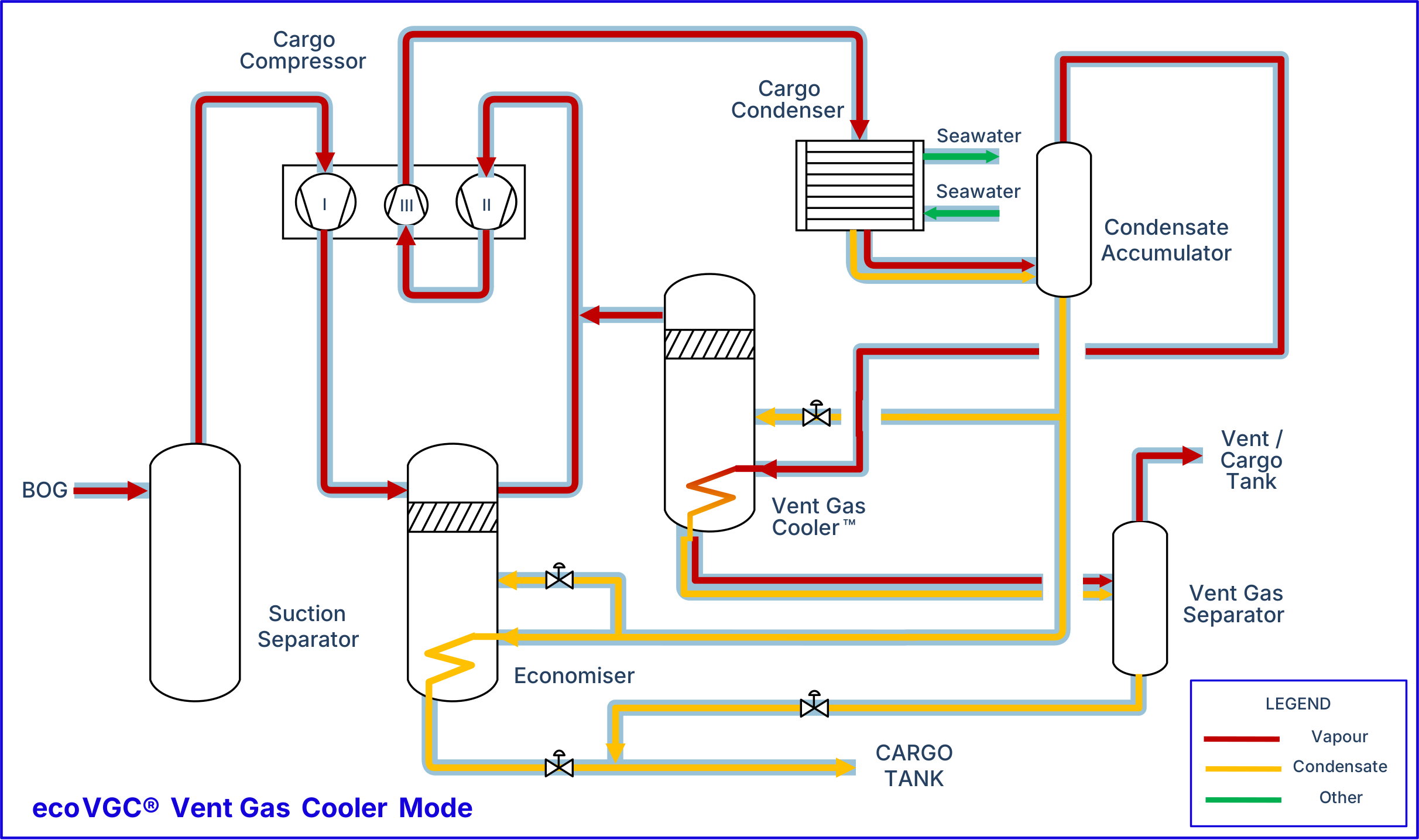
ecoVGC® adds a vent gas cooler to the reliquefaction cycle.
The volatile and incondensable fractions a standard plant cannot condense are cooled, and returned to the cargo tank, rather than simply recycled.
ecoVGC® operates in two modes:
Coefficient of Performance (CoP) / Capacity Mode
Where ethane content is within normal limits, acts as a second economiser to increase refrigeration capacity and efficiency during loading, cooldown and pressure maintenance.
Vent Gas Cooler Mode
Maximises performance with high-ethane content, or cargoes with inert contaminants, that conventional plant cannot fully handle.
Extend the operating envelope. Condense more challenging cargoes.
A compact enhancement to proven cargo handling platform
ecoVGC® is an enhancement to the cargo reliquefaction design adding capability, while retaining familiar equipment.
Don’t let the easy-to-handle cargoes define the plant
Commercial propane composition can change from cargo to cargo. A reliquefaction system that performs well on the clean end of the range can reach its limit as ethane, nitrogen and other incondensable components increase.
ecoVGC® extends the operating envelope so difficult cargo composition can be fully condensed and returned to the tank.
It also supports changing cargo grades and grade-changing operations, helping to maintain cargo handling capability as composition changes.
Full reliquefaction across a wider range of commercial cargoes.
Retain more cargo. Extend capability. Use the plant more effectively
Effective
Condenses and holds cargoes a standard plant cannot, so the vessel can carry a wider range fully refrigerated and in compliance.
Efficient
Additional refrigeration capacity can shorten loading and reduce reliquefaction running hours across applicable operating conditions.
Proven
An established technology with a long in-service record across the LPG/Ammonia fleet (over 200 references since 2012).
Proof
Effective and efficient across the range
ecoVGC® holds capacity across wide cargo range, while considering increasing standard vessel sizes and respective heat ingress.
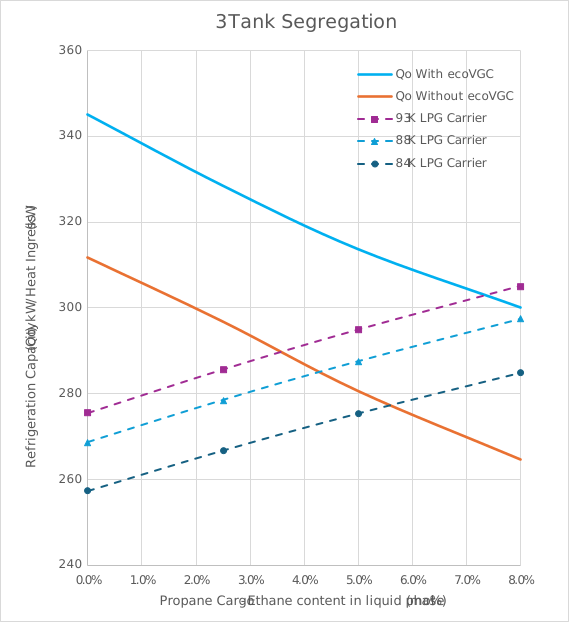
Additional capacity supports improved cargo operations, with fewer running hours reducing overall operation and maintenance requirement.
At 8 mol% ethane a single compressor delivers 265 kW without ecoVGC® and 300 kW with it, against a three-tank requirement of 285 to 305 kW depending on vessel size. Without ecoVGC® a standard system falls short of the three-tank duty from around 5.6 percent ethane on an 84,000 m³ vessel, and earlier on larger ships. With ecoVGC® the same plant stays above the requirement across the range, so the full three-tank segregation is carried fully refrigerated.
2012
ecoVGC® introduced a step-change to the market, allowing a VLGC reliquefaction plant to be optimised from four compressors to three; also offering 20% reduced loading time and 15% reduced running hours.
Since 2012
In service across more than 200 LPG / Ammonia carriers, with three compressors and ecoVGC® concept now the market standard.
Through-life support
The installed ecoVGC® fleet is supported through life through Babcock LGE service provision including onboard and remote engineering support, performance data, system health-checks, dry-dock support, retrofit and upgrades.
Carrying learning from operation back into the system keeps the capacity margin intact.
Condense across the range, not just the easy part
The question is not whether the plant can reliquefy. It’s whether it can hold full reliquefaction across the range.
Tell us the trade. We will bring the engineering.
Contact us