
ecoETHN®
Commercial ethane cargoes challenge cargo system performance
Commercial ethane can contain methane and other volatile components that reduce the performance of the reliquefaction plant. Babcock LGE’s patented ecoETHN® solution integrates cargo and fuel systems so methane-rich boil-off can be used as fuel, improving performance and efficiency.
Download ecoETHN® brochureLNG -162°C
Ethylene -104°C
Ethane -89°C
CO₂ -55°C
LPG -48°C
Ammonia -33°C
When methane builds up in the boil-off gas, reliquefaction performance suffers
Commercial ethane is not pure ethane. Methane and other volatile components are present in the cargo and become concentrated in the vapour phase as boil-off is generated.
The more volatile fraction is harder to condense, increasing the burden on the reliquefaction system and reducing the effective capacity.
For the owner and operator, the consequence is operational rather than academic. A challenging cargo can mean longer loading or unloading, higher energy use, and less operating margin in the cargo system.
Use the methane-rich vapour as fuel instead of making the cargo system keep processing it
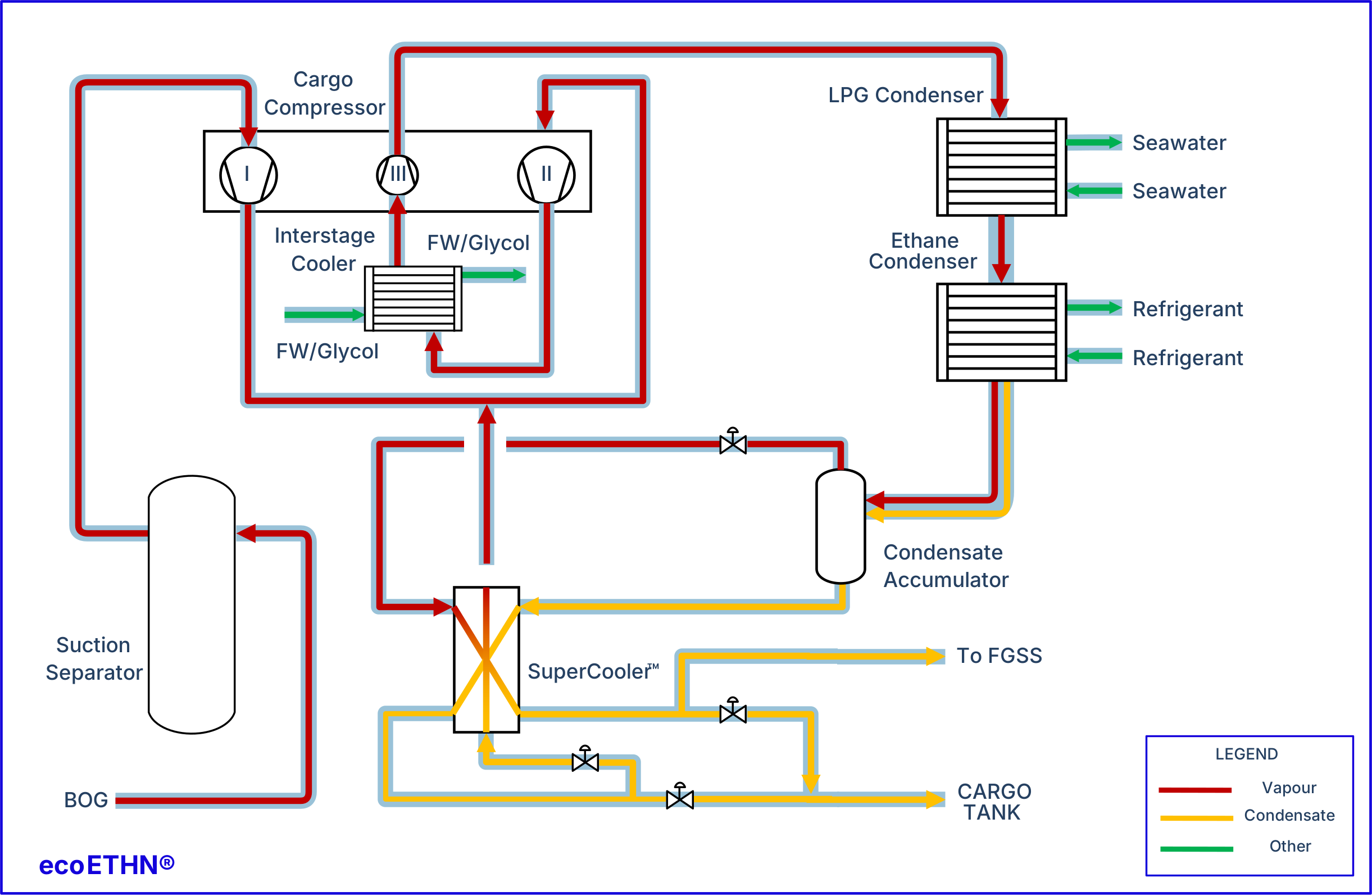
ecoETHN® connects the vessel’s reliquefaction plant with the fuel gas supply system. Rather than repeatedly returning methane-rich boil-off to the cargo tanks, only to have it re-enter the reliquefaction plant, the system directs some of that stream to the vessel’s fuel system.
Remove the constraint, use it as fuel and release cargo system capacity.
Reduced reliquefaction burden
Methane is removed from the bulk cargo. Over time this reduces the work the reliquefaction plant must perform.
Reduced operating time
Improved capacity reduces loading and cooldown times.
Lower through-life OPEX
Reduced cargo-system demand and use of methane-rich boil-off as fuel creates operating-expense benefits across the ethane value chain.
Engineered for commercial ethane as a reality
ecoETHN® enables the carriage of higher-methane-content commercial ethane cargoes, with capability for up to 2.0 mol% methane in the liquid phase.
That matters because cargo composition directly affects the ability of the reliquefaction plant to condense boil-off. By managing the methane content, ecoETHN® helps preserve usable cargo-system performance as the cargo becomes more challenging.
Adopt a systems approach. Design the cargo and fuel system to work together
ecoETHN® works because the cargo system and fuel system are treated as connected parts of the vessel architecture.
The reliquefaction plant enables the fuel gas system to utilise the methane-rich stream. The value lies in deciding where each component should go, rather than asking one system to process everything.
Improve the cycle
ecoETHN® is enabled by Babcock LGE’s SuperCooler™ technology on its ethane cargo and fuel systems.
SuperCooler™
Improves reliquefaction-plant efficiency by increasing available refrigeration capacity while reducing energy consumption.
Conditions methane-rich BOG stream for utilisation as fuel.
ecoETHN®
Reduces the methane burden placed on the cargo system by preferentially routing methane-rich boil-off to the fuel system.
Together, the technologies address both sides of the customer problem: reducing the difficult duty first, then improving the efficiency and capacity of the duty that remains.
A harder to manage cargo should not become a longer port stay
Cargo-system performance affects more than tank pressure. It influences loading and unloading time, compressor operating hours, power demand, fuel consumption, and vessel turnaround times.
By reducing the methane-rich duty handled by the cargo plant, ecoETHN® creates a direct route from technical performance to commercial value.
Cargo composition
Higher methane content increases the difficulty of the reliquefaction duty.
Cargo-system duty
ecoETHN® removes part of that difficult duty from the cargo plant.
Operating time
Lower duty can reduce the time required during loading and unloading.
Operating cost
Fewer operating hours and useful fuel substitution can reduce through-life OPEX.
Proof
From first 99,000 m³ very large ethane carriers (VLEC) built in China to the world’s largest ethane carriers.
2.0 mol%
Methane capability in liquid phase
99,000 m³
Pacific Ineos Belstaff first 99k VLEC built in China
6 × 150,000 m³
ULEC systems awarded to Babcock LGE in 2024
45 x VLEC at Jiangnan
Cargo handling + fuel gas supply (SuperCooler™ and ecoETHN®)
The Pacific Ineos Belstaff, the world’s first Chinese-built 99,000 m³ VLEC, entered service with a fully integrated Babcock LGE cargo handling and ecoETHN® fuel gas supply system. The owner subsequently cited higher efficiency, lower consumption and reduced CO₂ emissions from the integrated arrangement.
Read the case study.
Through-life support
Cargo behaviour changes. The engineering relationship endures
Ethane carriers operate across changing cargo compositions, trading patterns and operating conditions. Babcock LGE supports the installed fleet through operational engineering, remote support, performance analysis, training, spares, upgrades and dry-dock support.
Operational learning can therefore be fed back into future cargo-system performance and optimisation rather than stopping at delivery.
More cargo flexibility
Greater efficiency. Better use of energy already onboard
ecoETHN® turns one of the most difficult characteristics of commercial ethane into useful vessel energy. For the owner, the value is not another piece of equipment. It’s the ability to handle real commercial cargoes without allowing methane content to dictate cargo-system performance.
Tell us the problem. We’ll bring the engineering.
Contact us