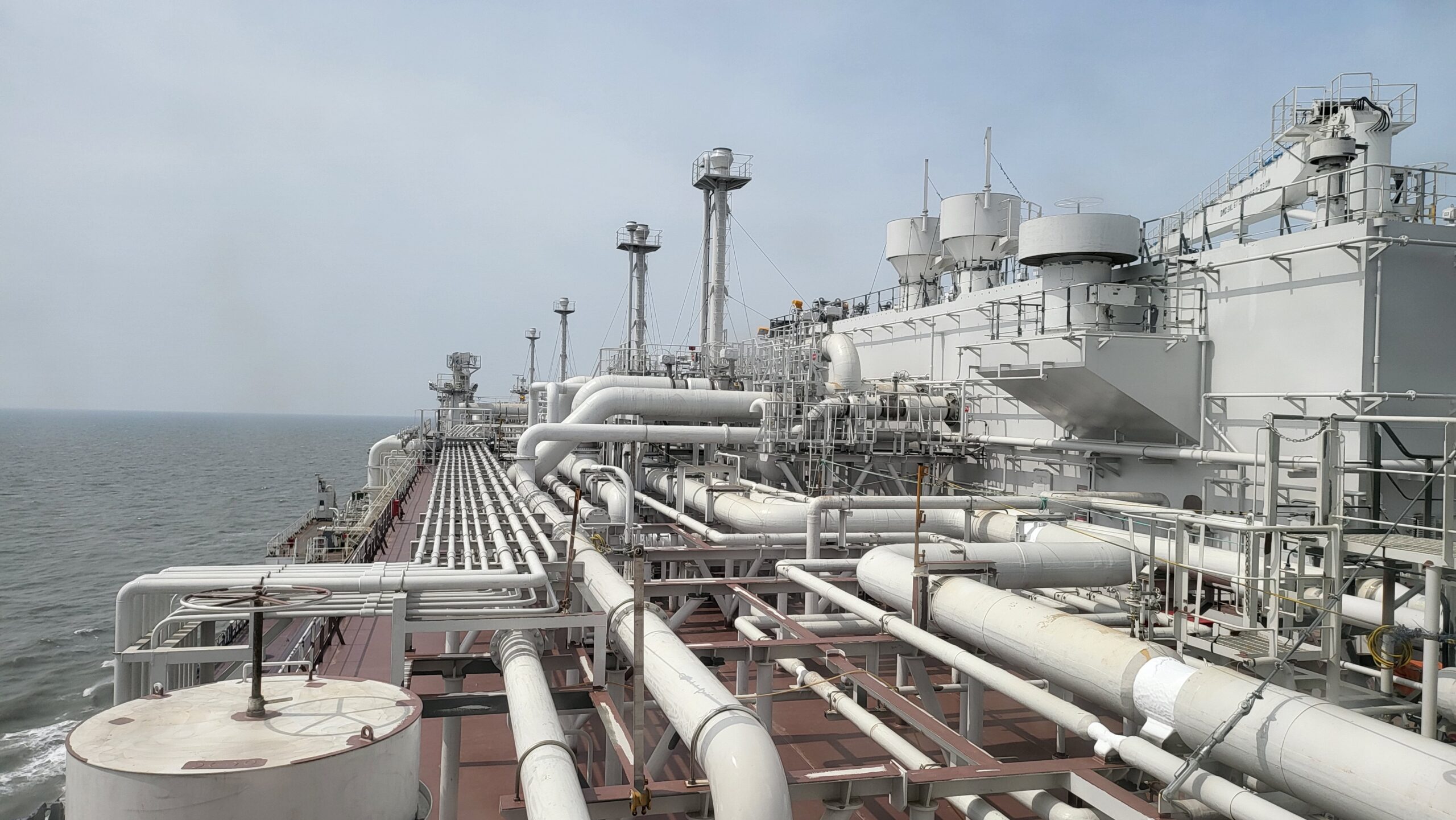
From first orders to 150+ contracts
How operating experience has continued to develop ecoSMRT®
The 150th contract was a commercial milestone. The stronger proof is the operating evidence behind it: a growing international fleet feeding experience back into performance guarantees and the next generation of the platform
In February 2018, Babcock LGE announced the first commercial orders for ecoSMRT®, its Single Mixed Refrigerant LNG boil-off gas reliquefaction system.
The initial programme covered four LNG carriers under construction at Hyundai Heavy Industries’ Ulsan and Samho shipyards.
Less than eight years later, Babcock LGE secured its 150th ecoSMRT® contract. The technology has been selected by more than 25 shipowners and is represented across a diverse international LNG fleet.
The significance of that growth is not simply the number of systems ordered.
Every commissioning programme, gas trial and period of operation has added to Babcock LGE’s understanding of how LNG carriers generate and manage boil-off gas across different vessel designs, routes and propulsion profiles.
That experience has progressively been fed back into the product.
The challenge
Engine demand and boil-off generation do not always match
Every LNG carrier generates boil-off gas as heat enters the cargo during a voyage.
Part of that gas can be used as propulsion fuel, but natural boil-off generation and engine demand do not remain matched across every operating condition.
At reduced vessel speed, while waiting or at anchor, or whenever propulsion demand falls, more boil-off gas can be available than the engines require.
Without sufficient reliquefaction capacity, the vessel has fewer options for condensing that excess vapour and returning it to the cargo tanks.
The customer problem therefore extends beyond cargo-tank pressure. Owners and charterers need to balance cargo retention, propulsion demand, reliquefaction capacity, electrical-power consumption and charter requirements across the vessel’s changing operating profile.
What Babcock LGE developed
ecoSMRT® was created around a Single Mixed Refrigerant process designed to provide an efficient, compact and operationally straightforward route for returning excess boil-off gas to the cargo tanks.
Excess vapour passes through the reliquefaction exchanger, where the mixed-refrigerant circuit provides the cooling required to condense the gas before the resulting liquid is returned to storage.
Its modular architecture uses a single refrigerant compressor and does not require the external pre-cooling associated with some alternative arrangements.
This supports a compact footprint, fewer rotating components and reduced maintenance demand while providing reliquefaction capacity independently of vessel speed.
For the shipyard, that creates a repeatable integration package. For the owner and operator, reduced machinery count supports simpler operation and maintenance. For the charterer, reliquefaction provides another means of protecting cargo delivery when boil-off generation exceeds propulsion demand.
From first orders to fleet-scale proof
The growth of ecoSMRT® created something increasingly valuable: an expanding body of operating evidence.
The platform progressed from its first four commercial orders in 2018 to more than 50 contracts by 2021 and more than 100 by 2022.
By 2024, nearly 60 systems were reported in service and ecoSMRT® had received the King’s Award for Enterprise in Innovation.
In 2026, Babcock LGE secured its 150th contract while also introducing the next development of the platform, ecoSMRT® 2.5.
But the strongest evidence of maturity is what has been learned between those milestones.
Development driven by evidence at sea
As the installed fleet has grown, Babcock LGE has gathered evidence through gas trials and commissioning, operating-data analysis, remote performance reviews, service activity, vessel attendance, dry-dock experience and direct feedback from owners, operators, crews and shipyards.
By January 2026, Babcock reported more than 1,000,000 operating hours and feedback from approximately 90 sailing vessels.
That evidence allowed engineering decisions to be based increasingly on how the system performs throughout actual vessel operation rather than on design calculations alone.
One of the clearest results has been the progressive strengthening of the ecoSMRT® performance guarantee.
A performance guarantee strengthened by the fleet
The original ecoSMRT® system carried a guaranteed reliquefaction capacity of 1.5 tonnes per hour (tph) of natural boil-off gas based on pure methane.
Operating evidence subsequently demonstrated that the system could reliably deliver more.
In 2023, the guarantee increased to 1.7 tonnes per hour. Continued analysis and product development then supported a further increase to 1.9 tonnes per hour for applicable systems from model 22-01 onwards.
That represents an increase of approximately 27% over the original guaranteed capacity from the established ecoSMRT® architecture.
Importantly, the previous increase was made available to applicable installed systems without requiring equipment modification.
This turns fleet experience into something tangible for the customer: a stronger performance commitment based on evidence accumulated in service.
150+ contracts are the milestone. The operating evidence behind them is the proof.
What greater capacity means onboard
Additional reliquefaction capacity matters when natural boil-off generation exceeds the vessel’s immediate fuel requirement.
Depending on the vessel and operating profile, greater capacity can provide more opportunity to retain cargo for discharge, increase flexibility at reduced sailing speeds, manage boil-off during waiting and anchorage periods and provide additional margin against charter requirements.
The value is therefore not the tonnes-per-hour figure by itself.
It is the additional operating freedom that capacity creates when the relationship between cargo, propulsion demand and voyage profile changes.
The 150th contract is an important commercial milestone, but it is not the principal proof point.
The stronger evidence is that a product first ordered in 2018 has developed through a growing international fleet, accumulated operating experience and repeated customer selection.
For shipyards, that provides an established, modular reliquefaction architecture.
For owners and operators, it provides a system whose performance and development are increasingly informed by evidence from vessels in service.
For charterers, it provides another way of protecting cargo value when propulsion demand cannot absorb the boil-off generated.
For Babcock LGE, the installed fleet creates a continuing engineering loop between design, operation, service and the next generation of the product.
A mature fleet turns operating experience into stronger performance and the next generation of the product.
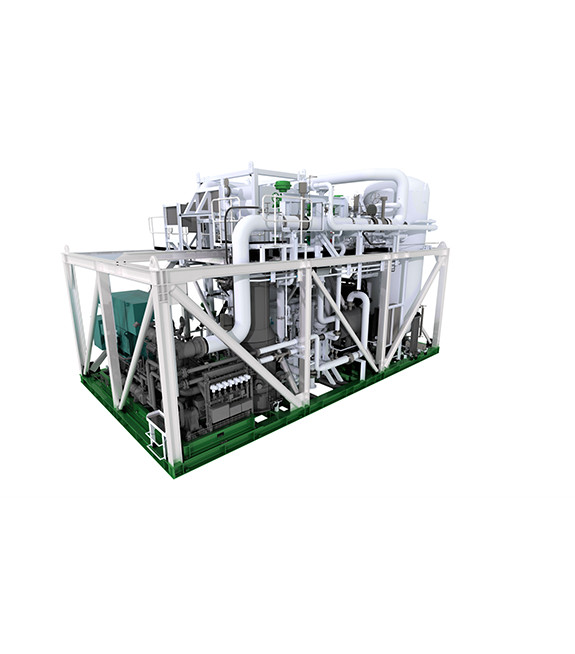
The LNG carrier market continues to develop, with larger vessels and more demanding reliquefaction requirements creating demand for greater capacity.
ecoSMRT® 2.5 extends the established Single Mixed Refrigerant architecture to a guaranteed capacity of up to 2.5 tonnes per hour of natural boil-off gas, based on pure methane.
It is not a departure from the engineering principle behind the existing fleet.
It is the next iteration of the same platform, informed by the operating experience of the vessels that came before it.