
Proving LPG as propulsion fuel on a newbuild VLGC
Babcock LGE’s first ecoFGSS® delivery connected LPG cargo storage, fuel conditioning and the main engine through one integrated system, proving that cargo already carried onboard could become a reliable source of propulsion fuel.
The first ecoFGSS® project proved more than LPG combustion. It demonstrated that cargo handling, fuel conditioning and propulsion could be engineered as one dependable vessel system
In 2019, Babcock LGE secured a landmark contract to provide the cargo-handling and fuel-gas supply systems for an 86,000 m³ LPG carrier being built in China for a leading Asian shipowner.
The vessel was the world’s first newbuild ship designed to use LPG as its primary fuel.
That changed the role of the cargo onboard. LPG would no longer be carried solely as the vessel’s commercial cargo. It would also form part of the vessel’s propulsion strategy.
Making that practical required much more than connecting a cargo tank to an engine.
The challenge
Changing the fuel changes the vessel
LPG carriers have transported propane and butane safely for decades.
Using LPG as propulsion fuel introduced a new operational relationship between cargo storage, fuel conditioning and the main engine.
The fuel needed to be taken from onboard storage and continuously conditioned to the pressure, temperature and flow required by the dual-fuel engine as propulsion demand changed. The system also had to support start-up, shutdown, fuel changeover and safety functions without making normal operation unnecessarily complex for the crew.
At the same time, the cargo-handling system still needed to perform its primary role safely and effectively.
Designing cargo handling and fuel supply independently would have introduced further boundaries between equipment, controls, safety philosophies, suppliers and commissioning responsibilities.
For a first-of-kind vessel, every additional boundary created another interface for the shipyard and owner to manage.
The challenge was therefore not simply whether the engine could burn LPG.
It was whether cargo, fuel and propulsion could operate together as one dependable vessel system.
Our customer requirement
The shipowner required an 86,000 m³ LPG carrier capable of using LPG as its primary propulsion fuel from the start of commercial operation.
The complete arrangement needed to draw LPG safely from onboard storage, condition it to the engine requirement and maintain stable delivery as engine load changed.
It also needed to integrate with the cargo plant and vessel automation while retaining the ship’s commercial LPG-carrying capability.
The engine interface was central to the project. Babcock LGE worked directly with MAN Energy Solutions for more than 18 months to ensure that the fuel-gas supply arrangement met the requirements of the ME-LGIP engine.
What Babcock LGE delivered
Babcock LGE provided an integrated LPG cargo-handling and ecoFGSS® fuel-gas supply package engineered around the vessel’s cargo, fuel and propulsion requirements.
The scope incorporated the LPG cargo-handling and fuel-conditioning systems, a dedicated deck-tank fuel arrangement with cargo-to-fuel transfer capability, integration with the MAN ME-LGIP main engine and common process, control and safety philosophies.
Babcock LGE also provided equipment procurement, shipyard integration and commissioning support.
The wider cargo plant incorporated Babcock LGE’s ecoVGC® technology, bringing cargo reliquefaction, cargo management and propulsion-fuel supply together within the vessel package.
Giving one engineering organisation responsibility for cargo handling and fuel supply meant the two systems could be developed around the same understanding of LPG behaviour rather than reconciled as separate packages later.
Fewer interfaces. Common engineering. One design authority.
From engineering integration to operational proof
The defining proof point was operation of the complete fuel route from LPG storage through to the main engine.
During commissioning and gas trials, ecoFGSS® had to demonstrate stable fuel conditioning while the engine moved through its operating-load range.
The integrated controls also had to respond correctly to changes in engine demand, start-up and shutdown sequences, fuel changeover and safety functions.
This was therefore not simply a test of an individual fuel-conditioning skid. It was operational verification of the integrated propulsion-fuel arrangement.
The trials demonstrated stable LPG conditions at the engine interface, fuel supply across the main-engine load range, coordinated operation between cargo, fuel, engine and safety controls, and successful transition into operational service.
Engineering recognised by the engine partner
The first project required close collaboration between Babcock LGE and MAN Energy Solutions (now Everllence) because performance at the engine interface depended on both systems operating together.
Following the development programme, MAN Energy Solutions publicly highlighted Babcock LGE’s cooperation, LPG experience and reliquefaction expertise, describing the first newbuild LPG-fuel project as a showcase for the two companies’ technologies.
The importance of that endorsement is the system relationship behind it.
The fuel-conditioning package could not succeed independently of the main engine. The engineering had to work across the interface.
For the shipowner, ecoFGSS® created a practical route to using LPG already carried onboard as propulsion fuel while retaining the vessel’s commercial cargo capability.
For the shipyard, integration reduced the number of boundaries that needed to be managed between cargo handling, fuel conditioning, controls and propulsion.
For the operator, automated conditioning allowed LPG supply to respond as engine demand changed without turning routine fuel operation into a labour-intensive process.
Because the fuel is LPG, its use can materially reduce sulphur oxide and particulate emissions relative to conventional oil-based marine fuels, with the precise tank-to-wake CO₂ benefit dependent on fuel composition, engine efficiency, pilot fuel and operating profile.
This first project proved more than LPG combustion. It proved that cargo, fuel and propulsion should be engineered as one vessel system
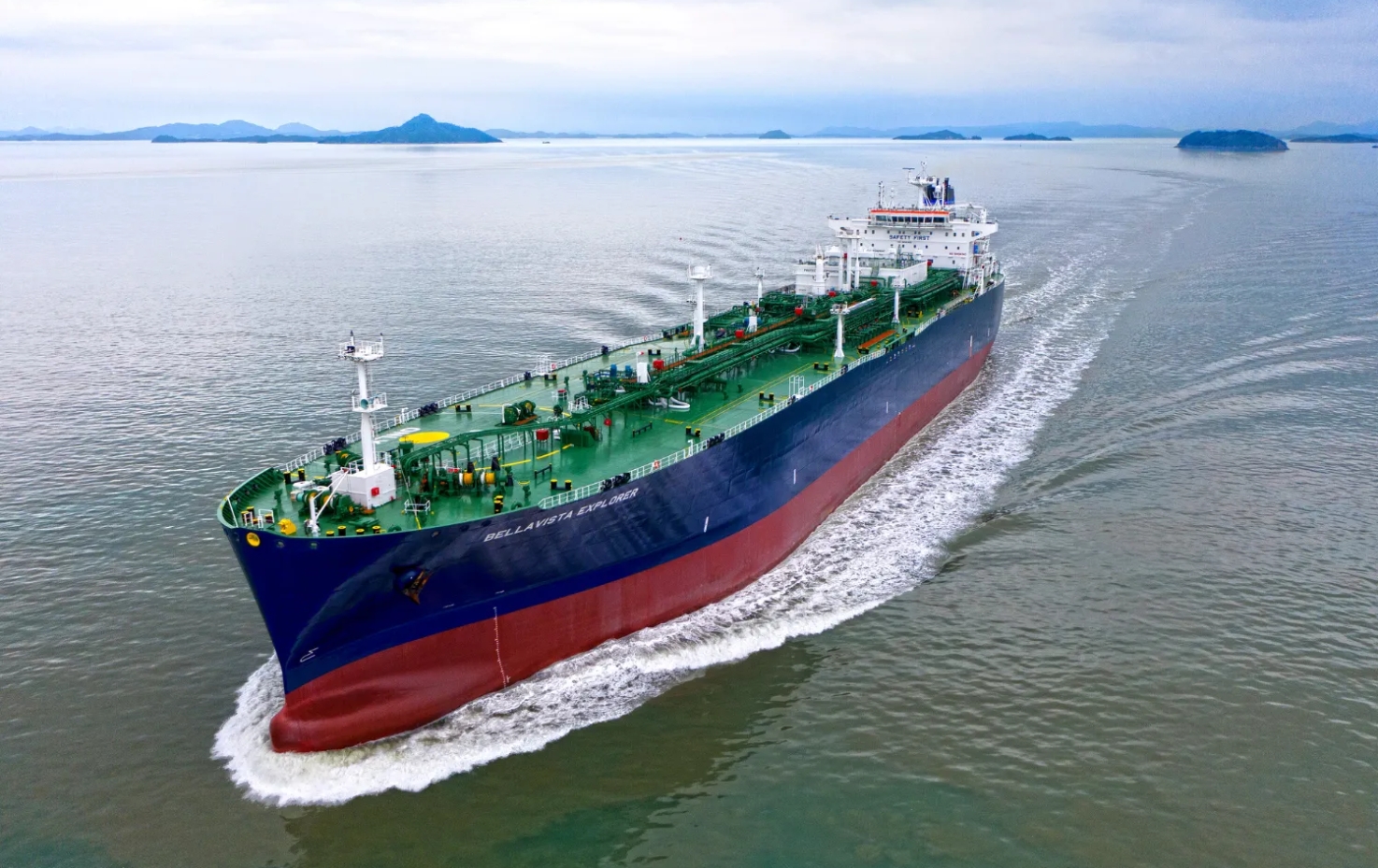
The original 86,000 m³ project established the engineering and commissioning basis for ecoFGSS®.
Subsequent applications have demonstrated that the principle is not dependent on one storage or pump arrangement. LPG can be supplied from deck or cargo tanks and handled under different storage conditions while retaining the same fundamental requirement: correctly conditioned fuel must reach the engine safely and reliably.
Babcock LGE also considered retrofit applications from the beginning, with a Front-End Engineering Design study for converting existing VLGCs to LPG fuel forming part of the original programme.
